

I recently read about Cotard’s Delusion, also called Walking Corpse Syndrome, or Cotard’s Syndrome, wich is when a person holds the delusional belief that they are dead.
On a side note, it instantly reminded me of zombies for some reason, although these are not similar in the least. I have mixed feelings about zombies, these gross misunderstood creatures, always hungry for human brains. Ultimately, it’s not like they willingly become walking corpses – nobody wants to end up as an undead. Their only problematic defect is that they like to eat brains and, in order to do so, they need to kill poor defenseless humans. Fortunately, these are fictional characters. There are many other implications about these entities, but I’m not going to get into detail about that. My friend Martin Pribble recently published a splendid analogy on his post Man vs Zombies.
These people are severely depressed, Cotard’s Delusion usually occurs when patients have psychoses such as schizophrenia and bipolar disorder, and is associated with depression and derealization. They think they are missing organs, that they don’t exist, some of them try to commit suicide to make sure they are dead. Apparently the best way to treat this disorder is with electroconvulsive therapy (ECT).
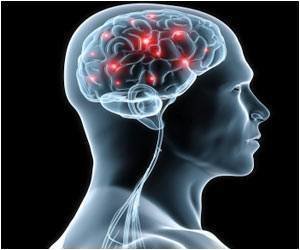
It also got me thinking, how a person who can feel their heart beating in their chest, believe that they are dead?
This reminded me of this character, described in the book The Journey Beyond Enlightenment by Stuart Wilde, who believed he was dead. Albeit the author does not make any reference to the aforementioned illness, or not that I can recall, I think this person fits this description perfectly.
The story goes that his family, puzzled by his refusal to do anything that dead people couldn’t do, take him to the psychoanalyst:
They told the psychoanalyst the whole story: “This man is in a poor state.”
The psychologist said, “Don’t be worried, I will fix him.”
He took a needle and asked this madman: “What do you think about the proverb that ‘Dead people don’t bleed’?”
He said, “It is absolutely right. I heard it when I was alive: ‘Dead people don’t bleed.’”
The psychologist was very happy. The family was very happy also, listening, thinking that the psychologist is really great; he is catching him on the first point.
The psychologist pushed the needle into the dead man’s hand and blood came out. He looked at the dead man and said, “What do you say now?”
The man said, “That means that proverb is wrong – dead people do bleed. I had only heard it; now it is my own experience.”
When a person is severely deluded, no reason or evidence will make them change their mind. Then it dawned on me – these people have the same process of reasoning as religious people.
The human brain is wired to believe in something, and even presented with evidence to the contrary, they somehow find a way to justify their belief, no matter how wildly irrational it may be.
In some sense, the religious type live their lives waiting for a better life in heaven – they might as well be dead already, delightedly contemplating their deity of choice whilst playing the celestial harp.
Okay, maybe that is going too far. I just have a really hard time trying to grasp the way some people think – and I am not talking about the mental ones here. Sometimes it is incredibly hard to walk in other people’s shoes.
This only proves that deluded minds only believe what they experience, and their experiences can be exceedingly twisted and bizarre.
What is really interesting is that human brains really are NOT entirely hardwired. As babies, we have about 2 times as many neurons than we will as an adult. During gestation we overproduce neurons. Then as we grow, we have experiences that get processed by these neurons, each experience activating certain synapses. Those neurons that don’t synapse with any others end up dying, completely normal processes, happens to all humans in the first 12 months.
The coolest thing? The outcome of how a specific person’s brain functions is hugely affected by experience. If you take a new born and blind fold it say, for the first few years of it’s life, when you remove the blind fold, the baby will BE blind. Why? The optic pathway never had any experience, no synapses were made, so even though all the physical parts are there, nothing works!
So now, is the human brain hardwired to believe? Or is that just the way it was brought up? (sorry for ranting but your post made me think! Awesome idea)
TL;DR: Brain wiring can be attributed to experience. Neuroscience is awesome 😛
It’s really not going too far. The hardwiring may be off, but the overall lack of rational thinking is certainly mind-boggling. You can take a person who looks up at the stars and ask, “what are those? What are they made of?” and they can tell you -burning gas, plasma, hydrogen, etc etc. Then ask them why they’re willing to believe that yet discard the evidence that has been repeatedly given even from their own bibles and there’s a complete fork in the road. No more rationality, no more logic.
I would like to point out to people though, patience in all things. You already know it’s pretty hard to even have an open discussion with a zealot. Be patient. Ask questions that do not so much attack a person’s belief as inspire thought.
Yeah I totally agree with you, I don’t understand how people can be so rational about most things in life, then go all double-think when it comes to god.
I’ve had some conversations recently that have tested my patience. I keep running into a double standard though: I have to have patience but I can’t expect any back if I disagree with what they are saying. Annoying 😛
Aye I try to lead them to make the analogies themselves.